you have no power over me
Share to:
Content Warning:
This post discusses coercive control, sexual coercion within a relationship, isolation, depression and substance use. If you have experienced any of these, please read with care or return to this when you feel ready.
Disclaimer:
This is a personal account written from my own perspective and experience. Identifying details have been omitted or changed to protect privacy. I name patterns, not people.
My newborn was asleep on my chest. Tiny and defenceless.
I was on the couch, not sleeping, which had become normal. And then the hallway bellowed with sound. Fuck you. Repeated over and over.
I don’t remember a lot from the first few weeks. Sleep deprivation does that. But I do remember that moment with perfect clarity – because my nervous system filed it somewhere permanent.
I wasn’t ready to be in a relationship when we met. I was confused and closeted, still learning what I actually wanted – but the social pressure to partner with men wasn’t subtle. It was constant and friends teased me about being single.
Photo credit: Matt Benson
Already Lost
When we met – he reminded me of someone I knew, someone I actually had deep feelings for, but this was “allowed.” So I followed him.
I say that not to diminish him, and not to avoid accountability. I say it because I entered that relationship already not myself. And that mattered for everything else that came after.
I confused his jealousy with passion. When you’re not yet sure what you’re looking for, the chase felt like evidence I was worth something.
I stayed. And I wanted a baby more than I wanted to leave.
I had a belief that a child would be the first love I could trust unconditionally. I wanted to get pregnant, he agreed. And for a moment I thought we were building something together.

Photo credit: Paul Zoetemeijer
Fractures
Pregnancy is when I first noticed that we were not working as a team. Decisions were made in spite of me. There was no negotiation – on names, on the future, where we would live or anything that mattered. It was always his way.
He came to the birthing classes. Reluctantly. But made sure I knew it.
I stayed in hospital for 5 days, induced early because of preeclampsia. There was a crash team. The epidural only worked on one side of my body and I had to lie on the other half for hours to try to numb it. My child arrived via forceps. I had an episiotomy. And after birth I had a fever, I was sweating and shaking so intensely that the bed was drenched through.
He was in the room. But he wasn’t really there.
A rumour started not long after the birth. Someone claimed our child wasn’t his. I told him what I had heard because I believed it was the right thing to do. And then he wouldn’t stop. The same accusation, cycling endlessly. Blaming me for a rumour that I had told him about. Relentlessness is its own undoing.
He persuaded me to leave my friend group. Using the rumour as an excuse to force my hand. To perform a display of loyalty. To prove that what we had was more important than my previous life.
Six weeks after the birth I wasn’t healed. I was in pain. He wanted sex. I told him I wasn’t ready, that my body wasn’t healed enough. He stressed that the doctor had said six weeks and he insisted that I didn’t care about him.
When I tried to explain myself he flipped it. Suddenly I was cruel for not sleeping with him.
So I complied.
I didn’t understand this tactic for a long time. Instead I would absorb the guilt. Coercion doesn’t need to be violent. It just needs a reason that makes your own instincts feel like you’re the problem.
DARVO – Deny, Attack, Reverse Victim and Offender. My boundary became the harm. My pain became evidence of my failure as a partner. The original violation didn’t matter because I became the problem.
Coercion works because it makes submission feel like a choice and then it makes you responsible for the violation.
Then came the insistence that we move. Hours away from my city, my people, my home, sixteen years of roots.
I said no. I said I would never leave.
He was relentless. I had a new baby, no sleep, a body still healing. He assured me that if I didn’t like it, we could go back. That if it didn’t work out, I could go home.
I believed him. So I packed up my life and moved.
Photo Credit : Kiyota Sage
One Choice
Three months after we arrived, I told him I wanted to go home.
The answer was no.
It was always no to anything that mattered.
The small things he’d agree to. Just enough for him to look reasonable on the outside. And just enough to make me sound like the unreasonable one.
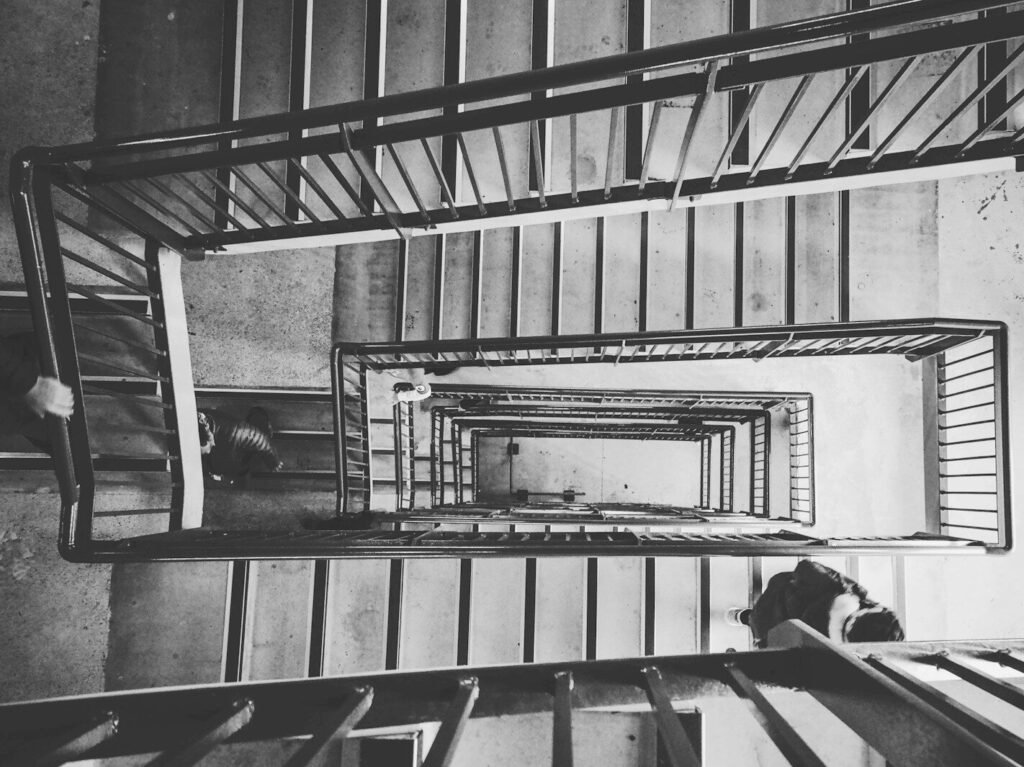
One coerced decision. That’s all it took to enter a labyrinth. You don’t see it when you’re walking in. You only understand it when you try to walk out – and then turn around to find the path has closed behind you. The architecture of the next decade gets built around that moment. Wall by wall. Until you look up one day and the room is considerably smaller than it was.
I know exactly when the walls went up. I just didn’t see them being built.
Photo Credit : Zoshua Colahcar Keys
The Architecture
Coercive control isn’t just about one person being a villain. It’s not that simple. It’s two wounded nervous systems in a dynamic that feeds itself – one that mobilises into control, and the other trained since childhood to accommodate and keep the peace. I learned long before I met him, to make myself smaller in the presence of someone else’s need for power.
It was small and constant. I spent $5 on a small statue of a family and brought it home as a surprise. I thought he would like it. He yelled and it went on for hours. It was a waste of money. He should have been there to choose it. Every purchase required justification. Every resource was accounted for. Meanwhile things appeared for him without discussion or explanation.
Financial control is invisible from the outside.
On Valentine’s Day I asked for a gift. He said he didn’t give gifts. He came home with a small packet of chocolate and threw it at me.
When I left, he would apologise deeply. He promised he’d change. It lasted about a week before it went back to control.
The humiliation of it isn’t just emotional. $10 of petrol a week in a small town means you can’t get out of it. You can’t leave, can’t have a social life or take yourself for a coffee.
Geographical isolation does the rest. No history. No one who knew me before. My network, my friendships, my sense of myself – all of it four hours away and completely out of reach. Every external reference point that might have reflected something true was gone.
This is the architecture of coercive control. It makes the cage feel like the only safe place to be – until you forget there was ever anything outside of it.
And for a long time I forgot who I was.
After I left, the financial control didn’t need him anymore. The infrastructure of restriction he’d built was still standing – and I was living inside it, still paying the price for decisions I had never agreed to.
I left the relationship. But I was still in the trap.
Photo Credit : Kelly Sikkema
The Erosion
I stopped believing I could do anything. Month by month, in a town that wasn’t mine, with no one who knew me, trapped inside a financial reality I hadn’t chosen. I became someone I didn’t recognise.
I was drinking. And it got worse as the isolation deepened.
The town is transient by nature. Tourists pass through – that’s the economy and the culture. The locals who stay have their networks, closed and long-established. I arrived as neither local nor tourist. Permanent, but with no history, no way in, and no one who had known me before.
It was the slow erosion of being somewhere that has no place for you.
I’d call people when drunk, not really knowing what I was asking for.
I was desperate to be found. Desperate for connection. I just didn’t know how to articulate that sober.
Four years of insomnia. My nervous system had been in a threat response for so long that it forgot what baseline felt like.
Sustained coercive control does this to a human nervous system. It doesn’t just affect your circumstances. It rewires you. It makes hypervigilance feel normal. It makes the absence of threat feel more frightening than threat itself.
The moment I left wasn’t after the worst incident, or when the financial pressure became unbearable. I left when my toddler started mimicking what they heard. And started yelling back.
I left that week and found a bed in a refuge, and it was the first time in a long time I felt stillness. My nervous system was in pieces. But the threat was no longer in my face.
Photo Credit :David Tomaseti
Inside the Lines
Reclaiming autonomy inside coercive control doesn’t look like liberation.
It looks like small, deliberate acts of choosing yourself.
It looks like deciding what goes into your own mind. What you study. What you understand. What you refuse to accept as the truth about yourself.
It looks like building something no one can take from you, on nothing, while everything else is still in limbo.
It looks like meditating on the floor when the pain was unbearable. Finding stillness inside chaos because chaos was all there was. Getting up on days that asked everything and offered nothing in return.
None of it was clean and none of it was linear. I was healing and breaking in the same hour. Building with one hand and holding everything else together with the other.
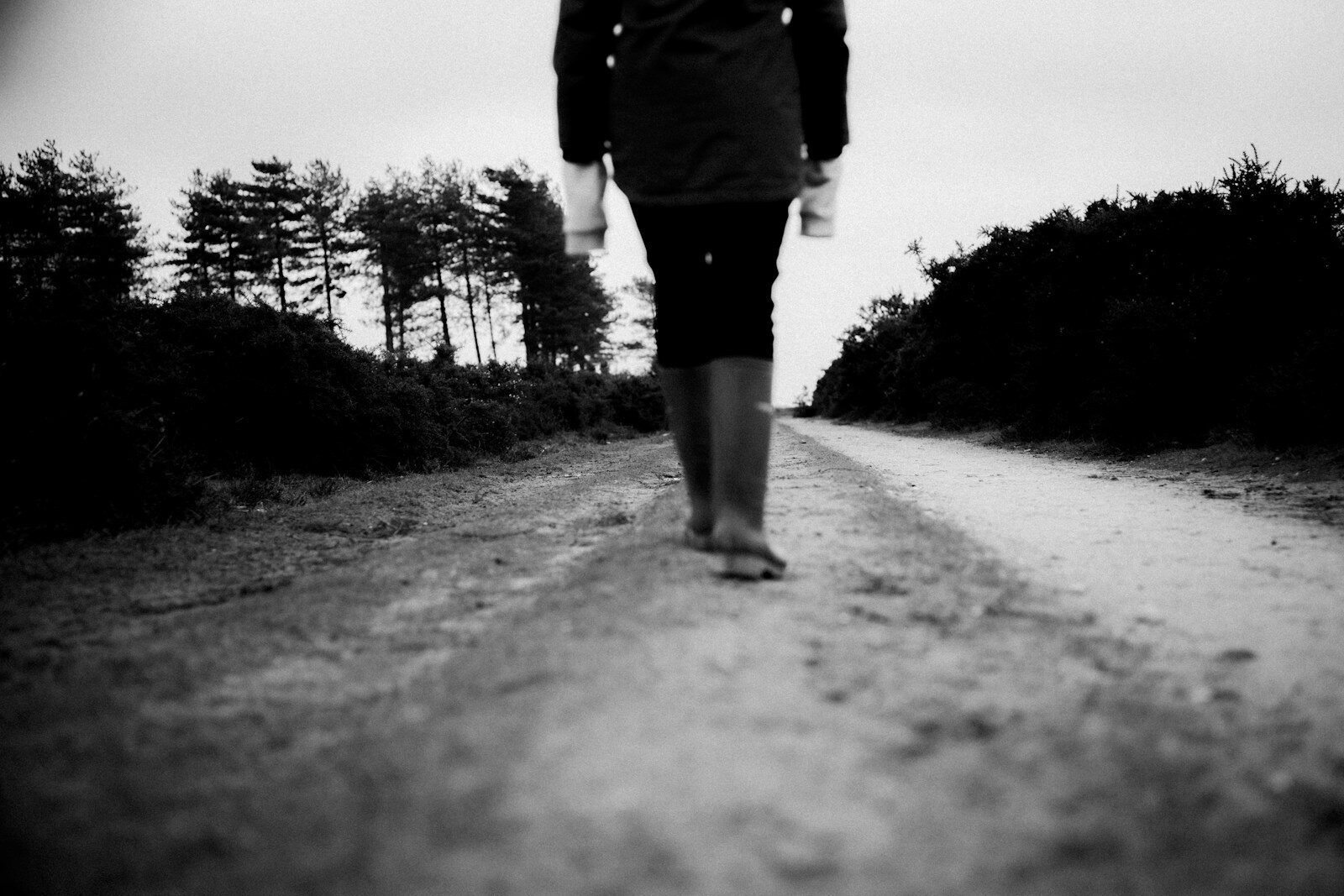
Photo Credit : Annie Spratt
Residue
There is a recognisable dynamic where proximity becomes leverage. Where just as breathing room appears – it gets closed. Where just as your nervous system starts to believe that safety might be possible – it happens again.
You work hard to build the distance – then the geography closes.
He could have gone anywhere. He moved here – to where I live. And I found out the way you find out anything in a small town.
This is what coercive control looks like when it outlasts the relationship. The leverage doesn’t disappear when you leave.
And when the leverage is the most precious thing in your life – there is no way to leave it. There is no contact to cut. There is just the ongoing reality of it and the question of how you survive without losing yourself entirely.
I know what it is to have your hope crushed so many times it stops feeling like hope.
I know what it is to build with trembling hands – only to watch it get dismantled.
Fight, hope, stomp, resignation, and repeat.
Exhaustion is the point.
I have refused to stay resigned. Not gracefully. And not consistently.
But I have refused.

Photo Credit : Zach Reiner
Truth
The nervous system cannot complete its healing response while the threat remains active.
And sometimes you have no choice but to stay in it anyway.
So you heal what you can. Between the lines. In the fragments. You reclaim what you can – your mind, your understanding, your refusal to accept someone else’s version of who you are and what you’re capable of.
One coerced decision can change the architecture of your life.
But inside that architecture – Inside the financial restriction, the geographical trap and the leverage that never lets go – you can reclaim your voice. Your autonomy. Your sense of what is real and what was created to make you doubt yourself. It doesn’t happen in one moment or because the situation resolves.
It happens in the decisions you make about who you are while everything else is falling apart. In what you refuse to accept as the truth about yourself. In what you keep building even when it gets knocked down. Even when you’re exhausted.
I am still navigating something with no clean ending.
But I am not the person who disappeared into that town.
Anna Roters
This is part of a longer story.